Everything in life is somewhere else, and you get there in a car. -E.B. White

Sunday, April 26, 2015

WARNING: This post is NOT about cars*


The Supercar Kid will now venture into uncharted territory -- a topic other than fast
cars.

This post will, as always, contain no controversy. It also won't contain any mention of a single vehicle with more than 500 horsepower*. If this is your first time visiting this blog, I would strongly suggest reading the 3 much more entertaining posts below before reading this one. If you've been to this blog before, you are either A) saddened by the loss of exquisite material usually featured here, or B) relieved that there is finally an exposure to some variety.

(If you chose B though, you probably stopped reading this blog after the first two posts anyway, and therefore aren't reading this. Cheers.)


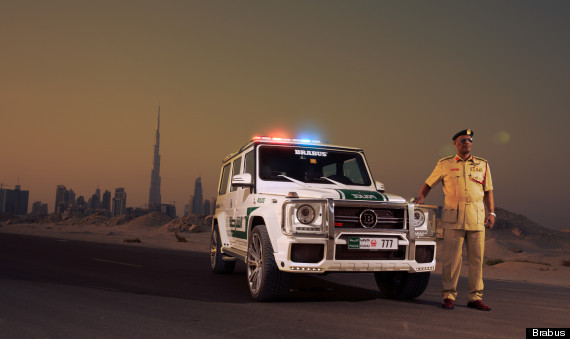
So my post today is actually about golf. In case you're wondering, I'm not very good at playing golf. Which is ironic, considering I work on a golf course. But my job doesn't involve playing, it involves helping other people who play golf on a regular basis. And I'm much better at that. Anyway, today I'll be writing about the non-car-related story of Michael Greller (left in photo above), who recently took a giant step in careers from being a 6th grade teacher to being a professional caddie (Which is what I am, save for the professional part). 

http://www.wsj.com/articles/why-masters-champion-jordan-spieth-hired-a-former-schoolteacher-as-his-caddie-1428881077


The first time Michael Greller experienced the Masters (a prestigious golf tournament held annually in Augusta, Georgia for the best of the best), he was just a spectator, walking around, enjoying the scenery, and of course, watching golf. He happened to be following Rory McIlroy that day. Greller was a 6th grade teacher who enjoyed watching golf. His career as a caddie began in 2006, where he was a spectator at the U.S. Amateur Public Links Championship in his home state of Washington. He noticed one of the players, Matt Savage, was having a hard time carrying his own bag. Greller went up and asked if he might caddie for him, free of charge. Savage, of course, accepted, and after the round was over Greller refused to accept monetary compensation, though offered.

In  2010, Savage recommended Greller to another amateur, Justin Thomas, who gladly accepted him. At this point caddying was just a hobby to Greller. He would often bring a yardage book to his math class to use it as an example for his students. Well, shortly after, JT recommended Greller to a young amateur named Jordan Spieth. Well, in the very first tournament that Greller caddied for Spieth, Spieth won the tournament. Spieth, of course kept Greller for another tournament, which happened to be the 2012 U.S. Open. Spieth was still an amateur. But after placing 21st at that tournament, he became the top ranked amateur in the world.


Soon after, Spieth went pro and decided to make Greller his professional caddie. This meant Greller could no longer be a teacher. I thought this was interesting because most teachers really love their job and it takes a lot to be willing to quit. Obviously Michael Greller really loves his job now. Of course, he makes a little more money than the average 6th grade teacher, considering Spieth's win at the Masters a few weeks ago earned him $1.8 million. Caddies on the PGA tour generally get about 5-10% of the winnings of their pro, so Greller is pretty much good to go for now. And it isn't easy to become a professional caddie either, so he obviously has a talent unrelated to his school-teaching position. It helps of course to be a math teacher, too, but still. Greller's story is quite fantastic considering the career he has now. It isn't easy to have a job like his. I should know, since I do exactly the same thing he does.



*Well, now that my non-car-related post has come to a conclusion, I must return to an earlier point. As you may remember, I mentioned in the opening paragraph of this post that this one would include no mention of cars with 500 horsepower or more. And I will stay true to my word. 

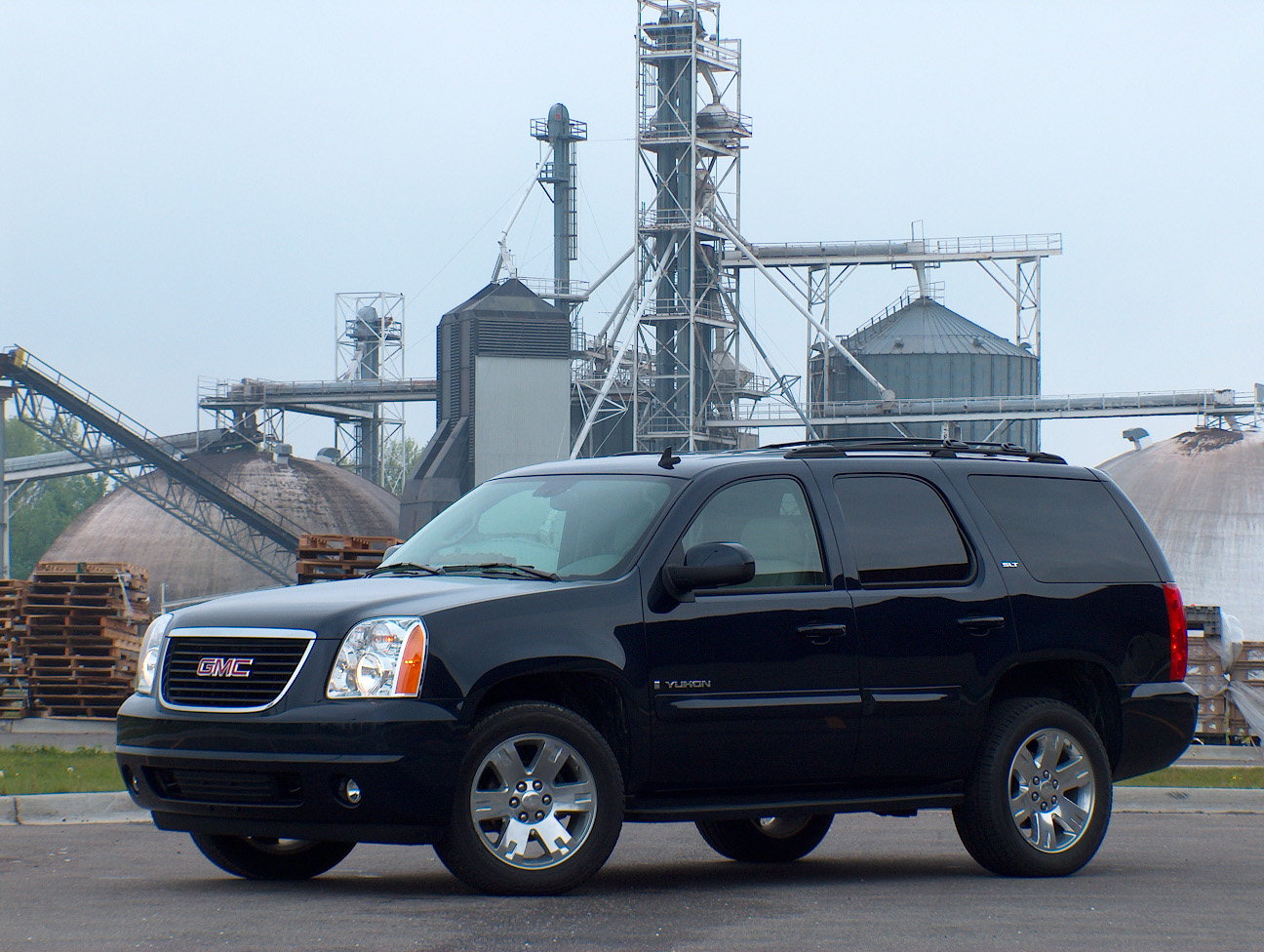
So, in order to keep everyone happy, here is Jordan Spieth's car, a 2007 GMC Yukon, incidentally, the same car he had in high school.

The Yukon has 380 horsepower.


TSK

Wednesday, April 15, 2015

You'd be crazy to try and outrun the police in Dubai


http://www.businessinsider.com/dubai-police-supercars-2015-2

http://www.businessinsider.com/ridiculous-supercars-of-the-dubai-police-2014-10

These two articles are from the same source and feature the same topic. A combination of both was referenced for this post.


Today we'll be travelling to the United Arab Emirates.

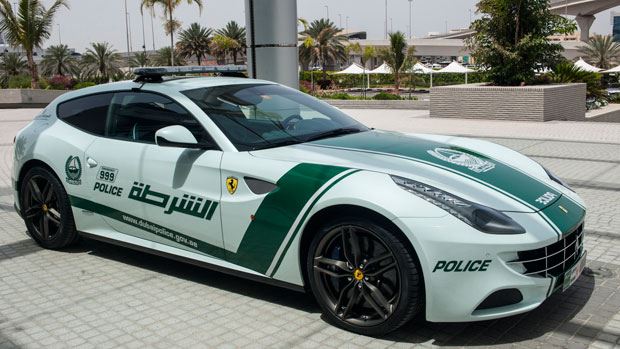
The Emirati Police Department in Dubai has a whole lot of bragging rights. With over 15,000 officers that cover a population of more than 2 million, the Police Force has a right to be proud of itself. The fleet includes some of the fastest and most expensive cars in the world. What is the overall goal of having such vehicles? Ironically, the purpose is not for high-speed chases. "We have never exceeded the speed limit on the highway," says Lt. Mariam Al Kaabi. On Twitter, the Police Chief noted that one of the goals was to "act classy with people".


To give you an idea of what he means by that...........


Very impressive.

Here are some of the cars used by the Police Force's fleet:


  • Bugatti Veyron
  • McLaren MP4-12C
  • Mercedes-Benz SLS AMG
  • Nissan GT-R
  • Brabus Mercedes G63 AMG
  • Bentley Continental GT
  • Lamborghini Aventador
  • Aston Martin One-77
  • BMW M6
  • Audi R8
  • Ferrari FF
  • Lexus RC F
  • Ford Mustang GT
  • BMW i8
  • Chevrolet Camaro SS


  • In order to recruit civilians to apply for positions as Police Officers, the Dubai team released this video, which showcases their cars. You can watch the video here.

    As you can see, the Police in Dubai have quite the deal going. Millions and millions of dollars have been put into the Police program. It is Dubai, after all. 


    So what do I think of all this? I think you would be out of your mind to attempt to escape from these guys. After all, if you're in Dubai you're probably driving this or something similar, which is no doubt slower than whatever the cop behind you has. But honestly, it doesn't make a lot of sense otherwise to have such extreme cars in your police force. I mean, come on, how do you arrest someone in a car with no back seat? Put them in the front? According to the Police Force, the primary goal is to "enhance its patrolling abilities". Well, if enhanced patrolling means more people are taking pictures of your police cruiser instead of running away from it, then yes, they have accomplished their goal. 

    You're probably not going to get very far in a police chase in Dubai. Unfortunately you won't ever get the chance to test it, because the Police Force has promised not to engage in a high speed chase with its new cars. That's too bad. I would've liked to see a green light drag race between a GT-R police car and the ordinary person's Corvette ZR1.

    Anyway, here's what you should do if you ever get pulled over by one of these police supercars:


    For the full review of the Mercedes featured in that video click here.


    TSK


    Wednesday, April 8, 2015

    Ferrari Fined $3.5 Million for "Not Reporting Fatal Crashes"

    “There is no excuse for failing to follow laws created to keep drivers safe.” 

    --Anthony R. Foxx, secretary of transportation, United States

    http://www.nytimes.com/2014/11/01/business/ferrari-fined-35-million-for-not-reporting-fatal-crashes.html?_r=1


    The law in question is known as the "Early Warning Reporting" Law, which is under an implied banner that says: If you want to be an automobile manufacturer and sell cars in the United States, you have to do whatever the U.S. Government tells you to do. In this case, the government is telling everyone to report any fatal crashes that may occur as a result of driving one of that manufacturer's vehicles. But some manufacturers may not be up to date with that system.

    And today, the manufacturer we shall use as an example is Ferrari. Ferrari has just been fined $3.5 million for failing to follow the law described above. They've already paid the fine and promised not to make the mistake again.


    I know what you're thinkingWhy is this important? I mean, isn't a fine the just punishment Ferrari deserves? Didn't they technically break the law?


    Now, I know I said this blog wouldn't be political or controversial, and I'm going to stick to my word. Which means I'm technically not allowed to answer any of those questions. Yet. So here's the deal. July 2, 2014. The NHTSA receives a few strongly-worded letters containing "classified" information about how Ferrari......*gasp*......is HIDING information about fatal crashes!!!!! How dare they!!!!!


    Now hold on a minute. What the heck does that mean, hiding about fatal crashes? How the heck do you hide a crash?

    Anyone? 

    It took me about 30 seconds to find this:


    In case you're wondering, no one was hurt in this video. Obviously this means it isn't fatal, but literally going to YouTube and searching "Ferrari crash" or something like that will bring up multiple examples of just how easy it is to find fatal crash footage.


    So once again, how do you "hide" a fatal crash?


    While we're on the subject, I might as well ask this too. Who cares if I know or not about Ferrari's fatal crashes? I sure as heck don't own a Ferrari. A lot of people don't. I'm also fairly certain that Ferrari owners aren't going to ditch their vehicles and go buy a Lamborghini either after hearing the news. I'm pretty sure the car I drive has been the subject of a fatal crash somewhere in the world, and it doesn't worry me that much.


    Another thing: Who exactly are the manufacturers supposed to report the crashes to? A government agent? The President? CNN?


    It's all just very interesting how vague this law is considering all the little details that one might consider. Some of you are probably saying right now: "Well, gee Tim, why are you making such a big deal out of this? Can't you just condemn Ferrari for its actions and be done with it?"

    Well, if it were that easy, I would have said it in the first line of this post and then quit writing. You see, it's not as simple as that. What has Ferrari actually done wrong here? Under the "early warning system" the article says, 'automakers are required to disclose claims they receive that blame vehicle defects for serious injuries or deaths.'

    Aha. So what's actually happened is the U.S. Government is displeased with Ferrari's safety ratings. That means that technically, Ferrari only has to report fatal crashes if the sole cause was a vehicle defect. The law says nothing about reckless driving or getting your camera wedged behind the brake pedal (that's what caused the wreck in the video above). This raises yet another question: How is the government supposed to know what caused each and every fatal crash? I mean, can someone provide a list of the crashes that were caused by a design flaw, and not the driver?


    What I'm getting at here is that having to report fatal crashes doesn't mean anything unless someone can prove that a flaw in the vehicle's design is linked to a certain number of deaths, which in this case it isn't. Unlike General Motors, who knew for years that their Cobalt design flaw was linked to hundreds of deaths. Those situations demand a penalty because they specifically break the law for the reason why it exists. To limit the loss of life. 

    Is Ferrari really hiding anything here? From what it looks like, no one is really sure. Which is why the government shouldn't go around fining whomever they please until they have concrete evidence linking a design flaw to a certain number of deaths. In the GM case, they had proof of both. In Ferrari's case, we have proof of neither.


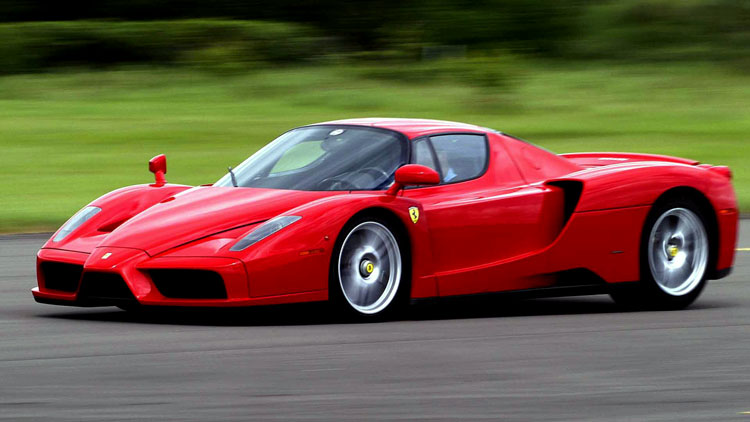
    More Ferrari pictures for the heck of it........


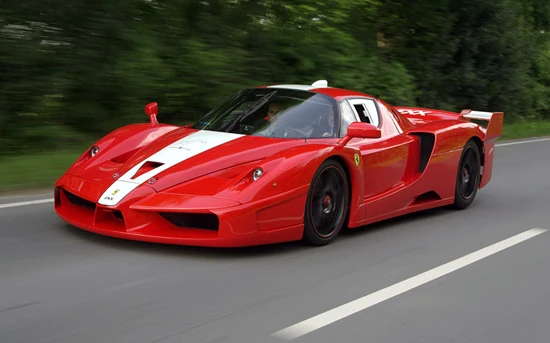
    And my favorite Ferrari.........


    TSK